
Most golf fitness professionals start with the same question:
“How do I get more golfers to work with me?”
It’s a fair question – but it’s not the most effective one.
A better question is:
“How do I build relationships with the people who already have golfers?”
Because the fastest way to grow a golf fitness business is not by constantly chasing new clients. It is by positioning yourself in front of the professionals who already work with them every day. If you’re still in the early stages of building that foundation, it helps to first understand the full picture of launching and growing your golf fitness business before diving into partnership strategy.
Why Referral Partners Are the Key to Growth
Think about where golfers are already spending their time and money:
- Golf instructors
- Teaching professionals
- Country clubs
- Golf academies
- Performance coaches
These professionals are working with golfers every single day – many of whom are struggling with:
- Limited mobility
- Poor stability
- Loss of strength
- Inconsistent swing mechanics
- Pain or physical limitations
Here’s the important part:
Most of these issues are not purely technical – they’re physical.
And that creates a massive opportunity for you.
Where Most Golf Fitness Professionals Get It Wrong
Many fitness professionals try to market directly to golfers through:
- Social media posts
- Ads
- General fitness messaging
While those strategies can work, they often lead to:
- Inconsistent leads
- Low trust at the start
- Constant need for content and outreach
In other words, you’re always starting from scratch. The good news is that social media doesn’t have to work that way – when it’s built around your referral strategy, it becomes a tool that reinforces trust rather than chasing attention. Learn how to amplify referral partnerships with social media reach so your online presence works alongside your relationships.
But there is a better way to approach social media – one that works with your referral strategy rather than against it. When you turn social media content into a client growth loop, every post reinforces the trust you’re already building through referral relationships.
The Smarter Approach: Build Referral Relationships with Golf Professionals
Instead of trying to reach golfers one by one, connect with a golf professional who already has dozens (or hundreds) of golfers.
This is what we call leverage.
When a golf instructor understands what you do – and trusts you – they become a consistent source of referrals. Social media can accelerate this process – learn how to build golf fitness client relationships on social media so your online presence reinforces the trust you’re building in person.
Not because you asked for it…
Because you showed them you can help their players.
How to Position Yourself as a Referral Resource
This is where most people hesitate. They think:
“I don’t want to come across as salesy.”
The good news is – you don’t have to.
The best way to build referral relationships is through education.
For example:
- Offering to speak at a coaching event
- Hosting a short workshop at a golf facility
- Sharing insights on how the body affects the swing
- Helping instructors identify when an issue is physical vs. technical
When you do this, something powerful happens:
You shift from being seen as a service provider…
To being seen as a valuable resource.
What This Looks Like in the Real World
When you educate golf professionals on:
- Mobility restrictions
- Stability limitations
- Strength deficiencies
- Motor control challenges
You give them tools to better understand their golfers.
And when they encounter something they cannot fix through instruction alone…
They refer that golfer to you.
This is how partnerships are built.
Real Case Study Example (Specific Event, Universal Strategy)
The following example comes from a specific live event involving a FitGolf affiliated trainer presenting to professional teaching instructors connected with the Philadelphia PGA Section. While this was one event in one market, the strategy can be applied anywhere.
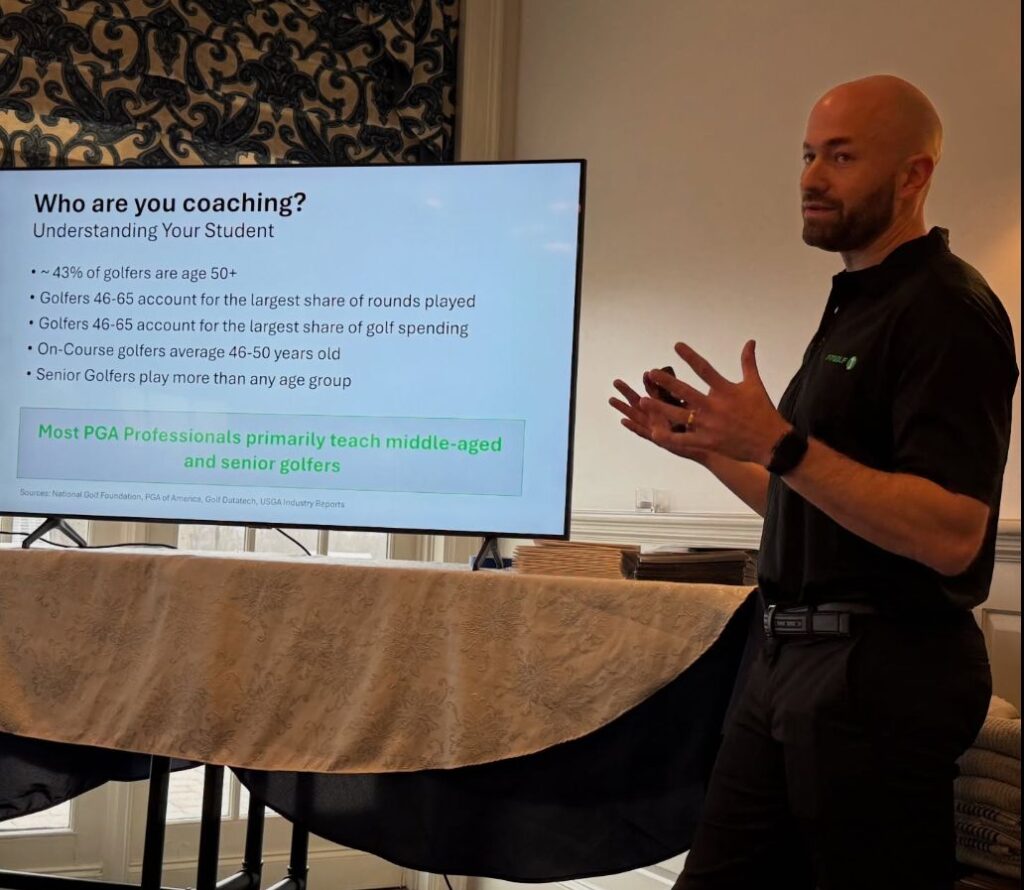
A local trainer positioned himself as an educational resource by presenting on the physical limitations that often influence swing mechanics in middle-aged and senior golfers.
Topics included:
- Mobility restrictions
- Stability deficits
- Strength loss
- Motor control issues
- Determining when a swing issue is technical versus physical
That type of presentation helps golf instructors better serve their players while naturally creating trust and referral opportunities for the presenter. Professionals who pair this approach with a strategic content presence find they can use content to establish authority and command premium rates well beyond what cold outreach alone could achieve.
The lesson is simple:
You do not need to “sell” golf professionals.
You need to help them.
Why the Education-First Referral Strategy Works So Well
As the golf population continues to age, understanding the body side of performance is becoming increasingly important for coaches who want to help their players improve while staying healthy and playing longer.
When you become the person who helps instructors solve those physical performance issues, referrals happen naturally. The next step is knowing how to convert referral traffic into paying clients once those introductions start coming in.
The Long-Term Advantage
When done correctly, referral partnerships create:
✔ A steady flow of qualified golfers
✔ Higher trust before the first session
✔ Better client retention
✔ Less reliance on constant marketing
The next skill to develop is how to turn referral clients into recurring revenue so each new relationship compounds your income over time.
And most importantly…
They position you as different from every other fitness professional in your area.
Where to Start
If you’re looking to grow your golf fitness business through partnerships, start simple:
- Identify 3–5 local golf professionals or facilities
- Reach out with the intention to help, not sell
- Offer to share insights on the physical side of performance
- Focus on building the relationship first
You do not need a perfect pitch.
You simply need to start the conversation.
Stop Chasing Clients – Build Referral Relationships Instead
You can spend your time chasing individual golfers…
Or you can build relationships with the professionals who already have them.
One approach requires constant effort.
The other creates long-term, scalable growth.
Grow Your Golf Fitness Business with Referral Partnership Support
If you’re not sure how to approach golf professionals or position yourself as a trusted resource, start here: Struggling to Get Golf Clients? Here’s Your Solution
And if you want to understand the bigger picture behind becoming the obvious choice in your market, be sure to read our One Mindset Shift post on ecosystem positioning and business growth.

